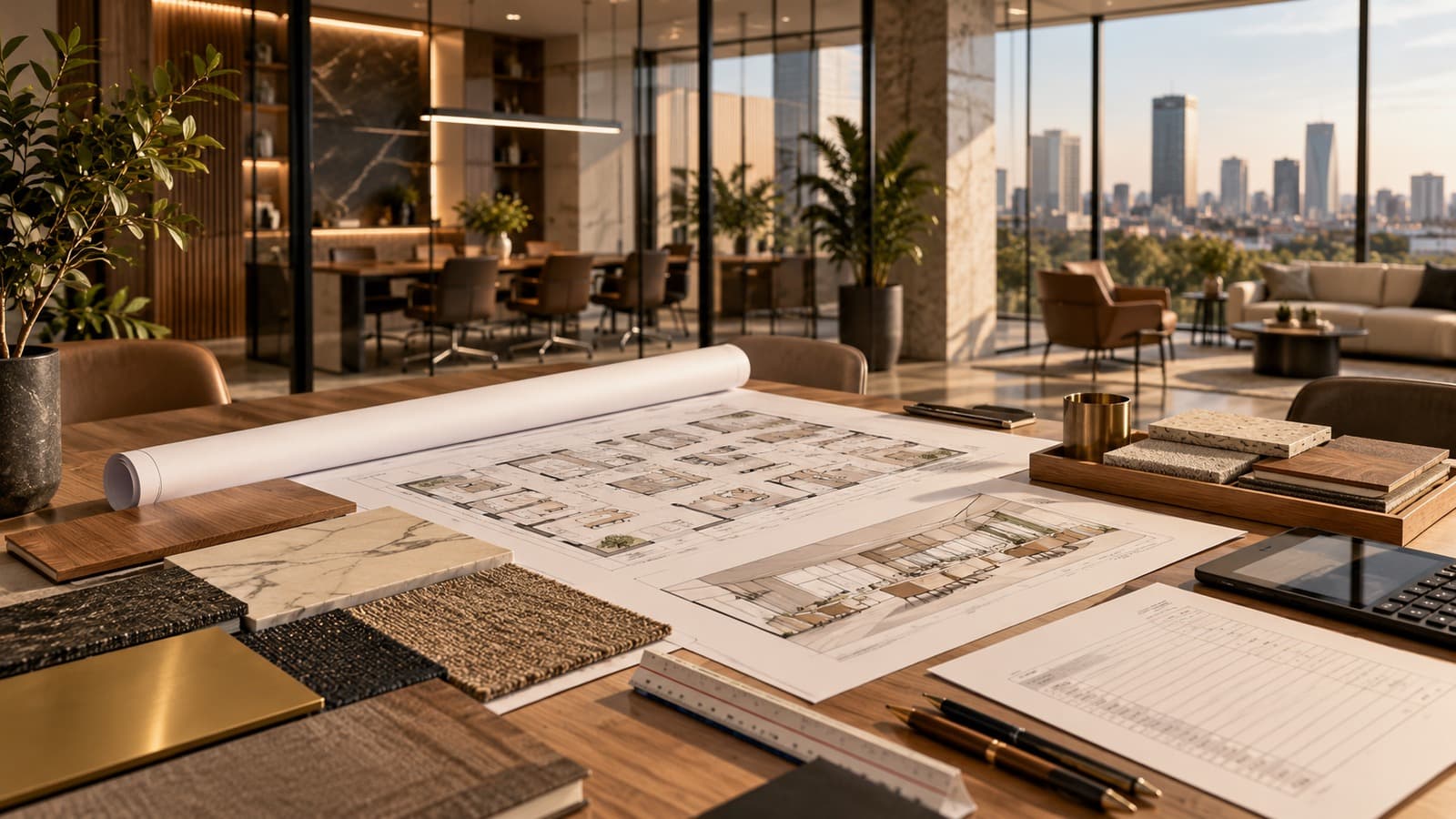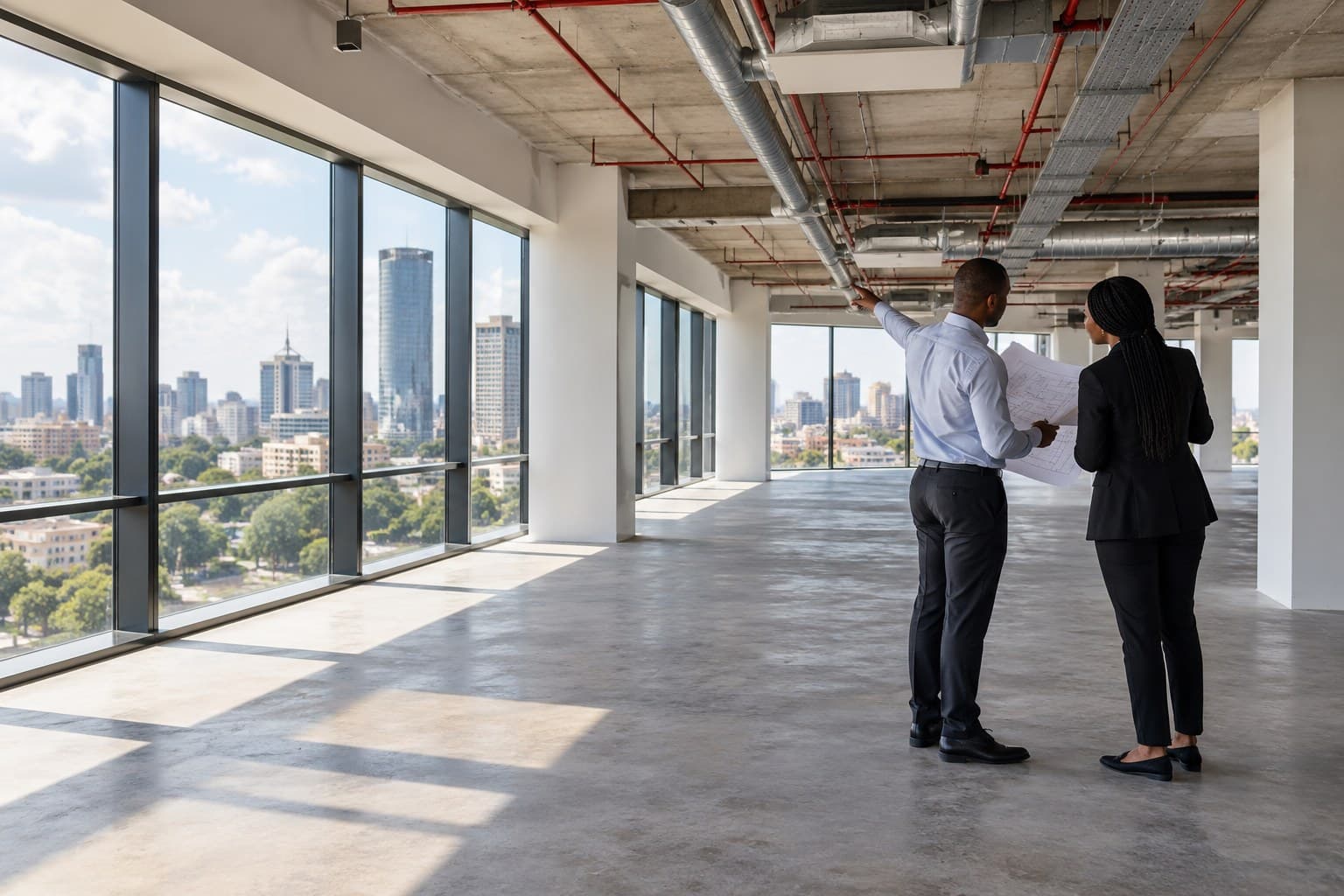
There is a strange stage on many interior projects when it can feel as though nothing is happening. The designer is still issuing drawings, an engineer wants another coordination meeting, somebody is waiting for a material sample, a layout has come back with comments, the contractor has raised a clarification and a supplier is confirming whether a particular system will actually work the way everyone expects it to.
Naturally, the client begins to wonder why construction has not started. It is an understandable question because construction feels like progress: walls go up, ceilings close, joinery arrives, flooring goes down and the space visibly begins to change. Design, coordination and review are much less visible, yet that apparently slow period before construction is often where a project is quietly saving the most money.
Changing a wall on a drawing may take a few minutes. Changing the same wall after it has been built requires labour, materials, demolition, disposal, reinstallation, programme time and, very often, a variation. That is why one of the simplest principles in interior project delivery is also one of the most important: the cheapest change is usually the one made on paper.
Design is not the delay before the project
I think this is where the design process is sometimes misunderstood. Design can look like the stage before the real work begins, but design is part of the real work. Its purpose is not simply to create attractive drawings. It is to resolve as many questions as reasonably possible before those questions become physical construction.
Where exactly should the partition stop? Does the ceiling height work with the air-conditioning services above it? Can the joinery door actually open without hitting something else? Where will the data points go? Does the selected flooring meet the performance requirements of the space? Will that lighting detail work with the ceiling system? Can the material actually be sourced within the project programme? Does the client still want the layout they approved three weeks ago? These can sound like small details until they are discovered on site. Then they stop being small.
A 50 mm clash on a drawing may be a line adjustment. A 50 mm clash after fabrication may mean remaking an entire component. That difference is one of the clearest reasons good design work cannot be judged only by how quickly the project gets to site.
Every unresolved decision eventually reaches site
Construction has an interesting way of exposing every unresolved question. You can postpone a decision during design, but you rarely eliminate it. Eventually somebody on site will need an answer: what height, which finish, which detail, which supplier, which direction, which location or which specification? If the answer is not available when the work reaches that point, the contractor either waits, proceeds based on an assumption, asks for an urgent decision under pressure or completes work that may later need to change.
None of those are particularly good project-management strategies. Good design coordination is therefore not bureaucracy; it is an attempt to move decisions to a point in the project where they are cheaper and easier to make. We want to discover problems while the problem is still pixels, paper and conversation, rather than after it has become gypsum board, glass, stone, timber, steel or electrical wiring.
“It is much better to argue about a partition location in a meeting than to demolish it on site.”
Coordination takes time, but poor coordination usually takes more
No interior exists in isolation. A ceiling is not simply a ceiling; it has lighting, air-conditioning diffusers, sprinklers, detectors, speakers, access panels and sometimes sensors competing for space within it. A workstation is not simply furniture; it may require power, data, floor boxes, cable management and ergonomic clearances. A kitchen involves water, drainage, power, equipment, ventilation and appliance clearances. Healthcare, laboratory and other technically demanding interiors push this interdependence even further.
A drawing can therefore look complete aesthetically while still being technically unresolved. Coordination is where these systems begin to speak to one another. Yes, coordination takes time, but poor coordination usually takes more; it simply charges the project later through RFIs, site adjustments, abortive work, substitutions and variations.
Samples are also decisions
The same principle applies to materials. A sample can sometimes feel like another small thing holding up approval, but the sample is where we answer questions before there are hundreds of square metres of the material on site. Is the colour right? Is the texture appropriate? Does the finish look completely different under the actual lighting? Will it tolerate the cleaning regime? Does the edge detail work? Is the workmanship achievable? Does the supplier's actual product match what we thought we were specifying?
The time to discover that a finish is wrong is when you are holding a sample in your hand, not after installation. Mock-ups, samples and prototypes can feel slower in the moment, but they are often inexpensive insurance against much larger mistakes.
Design freeze is a commercial milestone
The phrase design freeze can sound unnecessarily rigid, as though the project team is declaring that nobody is allowed to have another idea. That is not really the point. A design freeze simply means that certain decisions are now sufficiently resolved for procurement, fabrication or construction to proceed with confidence. Change is still possible after that point, but it may no longer be free.
A revised furniture layout before procurement may require only a revised drawing. The same revision after customised furniture has been manufactured is a completely different conversation. A changed tile selection before ordering may be straightforward; changing it after hundreds of square metres have been delivered may involve restocking fees, replacement lead times and programme consequences. One of the most useful things a project team can do is therefore make the consequences of late decisions visible, not to prevent change, but to make change informed.
Procurement makes decisions increasingly expensive
There is a point where design decisions become purchasing decisions. Once an order is placed, the project begins committing money. Materials may be imported, custom joinery may enter production, glass may be cut, furniture may be manufactured and equipment may be ordered. At that point, changing the design can create cancellation charges, restocking fees, lost deposits, long replacement lead times or products that simply cannot be returned because they were made specifically for the project.
This is why procurement should follow adequate design resolution. Buying early can sometimes protect programme, especially for long-lead items, but buying before the project knows what it needs can do the opposite. The commercial advantage is not merely ordering quickly; it is ordering the right thing at the right point of certainty.
Speed is not simply starting construction earlier
When project programmes become tight, there is often pressure to get to site as quickly as possible. Sometimes that is absolutely necessary. Fast-track delivery is a legitimate strategy, and experienced teams can overlap design, procurement and construction successfully. But fast-tracking is not the same thing as skipping decisions. In fact, fast projects require even more disciplined decision-making because the margin for recovery is smaller.
Starting construction quickly while fundamental questions remain unresolved may make the project look fast for the first few weeks. Then the RFIs start, followed by variations, rework, missing materials, revised drawings and resequencing. Actual speed comes from reducing uncertainty and ensuring that information, approvals and procurement decisions are ready before the work depends on them.
Client decisions can protect cost just as much as design decisions
Not every late decision originates with the designer or contractor. Client approvals are one of the most important parts of the project programme. Layouts need approval, budgets need decisions, samples need sign-off, variations need responses and equipment selections need confirmation. Sometimes several internal stakeholders need to agree before anything can proceed, and that is perfectly normal. What matters is recognising that every approval has a point in the programme after which delay begins to affect something downstream.
Good project management therefore does not simply ask whether something has been approved. It asks by when it must be approved so that the project is not affected. That second question is much more useful because it turns approvals from passive administration into active cost and programme control.
Good design should reduce the number of expensive surprises
No project will ever resolve everything in advance. Existing buildings reveal surprises, suppliers change availability, site conditions differ from drawings, client requirements evolve and some decisions can only be confirmed after work begins. The goal is not perfection. The goal is to reduce the number of things we discover expensively.
At Curzey, we increasingly see design, coordination and pre-construction planning as forms of risk reduction. A resolved drawing reduces uncertainty. A coordinated ceiling reduces clashes. An approved material sample reduces replacement risk. A confirmed specification reduces procurement ambiguity. A timely client decision protects programme. Individually these things may look small, but collectively they determine how smoothly a project moves.
That is why the period before construction should not be measured only by how quickly we can get through it. We should also ask how much risk we are removing before somebody starts building. Once the project becomes physical, every unresolved decision becomes more expensive. The cheapest change is the one made on paper.